
Client: NRMA Insurance (IAG)
Role: Lead Prototype Designer
Duration: October 2013 – February 2014
Overview
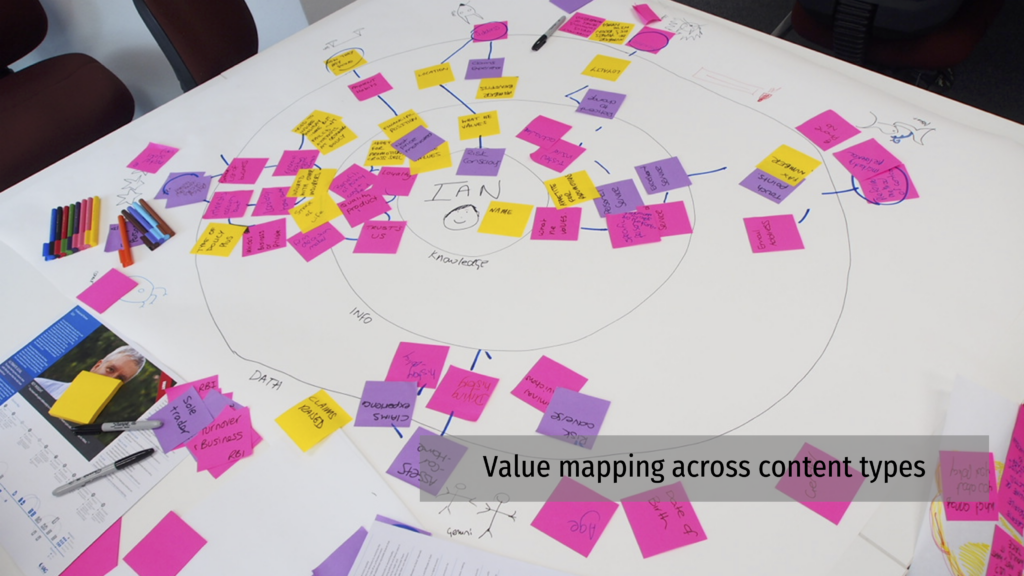
NRMA Insurance faced a strategic paradox common to premium brands in commoditised markets. While recognised for dependability, quality service, and value for money, NRMA operated in an industry where purchasing decisions often centred on price. Customers didn’t engage with their insurance until it was up for renewal or they had a claim, making it difficult to demonstrate the value already built in to their policy, or the value of tailoring their relationship with NRMA for wider protection.
The focus on home and contents insurance was chosen for this project, although we also explored the value-add of multiple policies across the product suite, including automotive and leisure. NRMA tasked the team with exploring what insurance could look like in 3-5 years and to discover and test enhancements, features and additions that would demonstrate value and quality to give customers confidence and security.
The business objectives were clear: retain customers who might defect on cost alone, attract new customers through differentiation, and validate product improvements and innovations before committing significant investment. Very little financial analysis was applied at the early stages, allowing the process to discover what was customer value before being constrained prematurely.
The Challenges
- Premium brand positioning in a price-driven, commoditised market
- Customers only engage with insurance at point of claim or renewal
- Need to demonstrate tangible value beyond price
- De-risk innovation investment by validating concepts before full commitment
My Role
As Lead Prototype Designer in a four-person customer experience (CX) team, I was responsible for translating strategic concepts into tangible, iterative prototypes to test with NRMA staff and real customers. This included:
- Designing and building paper-based prototypes
- Creating short videos to describe a feature in a mock commercial style
- Facilitating testing sessions with existing and potential customers
- Leading the analysis that determined which concepts progressed
- Documenting user flows with noted behaviours
Design Approach
Concept Development and Workshop Facilitation
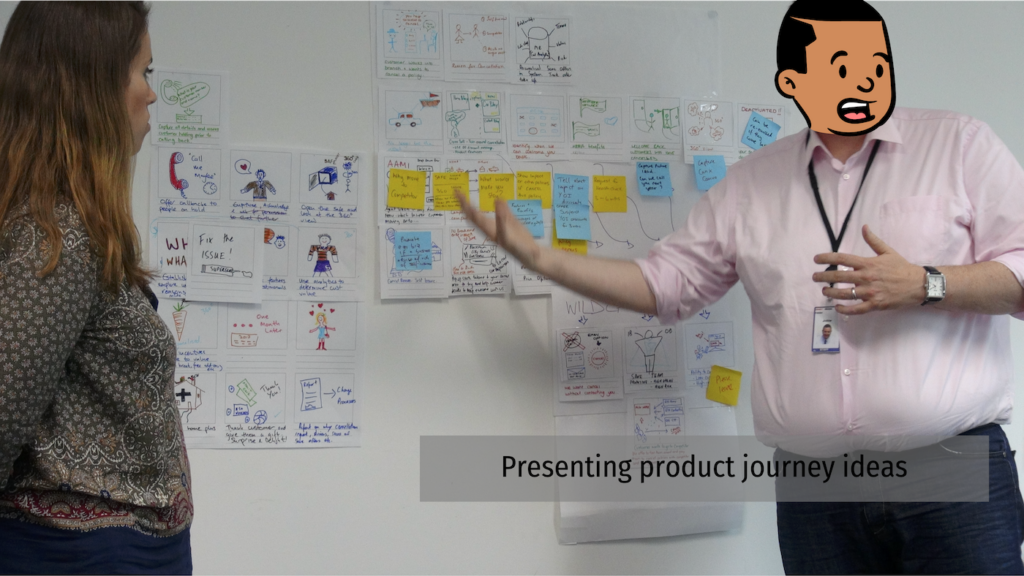
The engagement began with collaborative workshops with NRMA stakeholders to surface value hypotheses and potential service enhancements using methods like business model canvasses, empathy maps, storyboards and value propositions. I facilitated these sessions to extract concepts that could be rapidly prototyped and tested, ensuring ideas were specific enough to validate through staff-customer interactions.
Rapid Prototyping
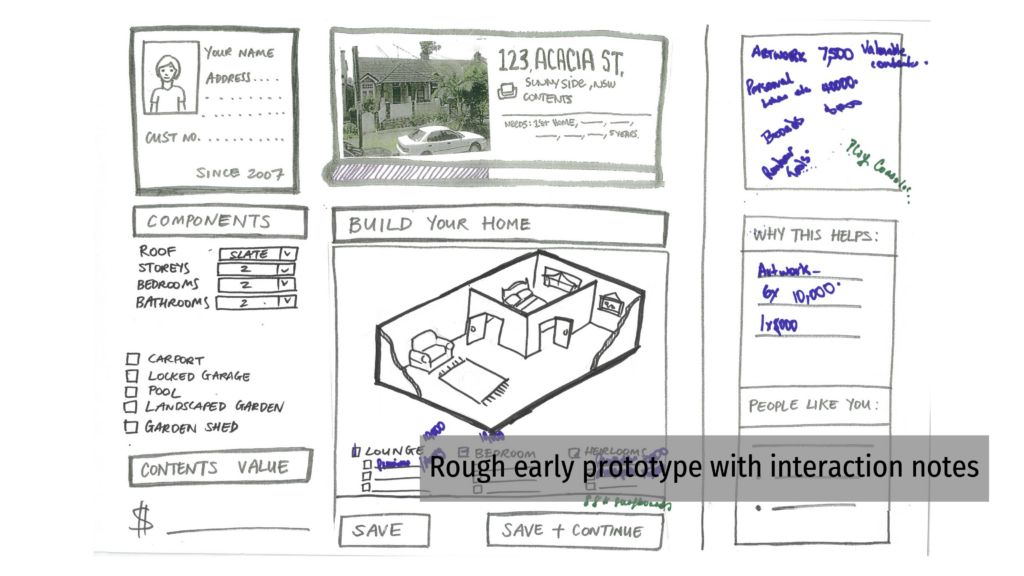
I designed and built paper-based prototypes that represented different service concepts and product features. These low-fidelity prototypes allowed us to test multiple ideas quickly and inexpensively, iterating based on customer interactions, staff SME input and expert review. The prototypes ranged from new quoting interfaces and proactive service concepts to digital policy management tools.
Testing and Observation
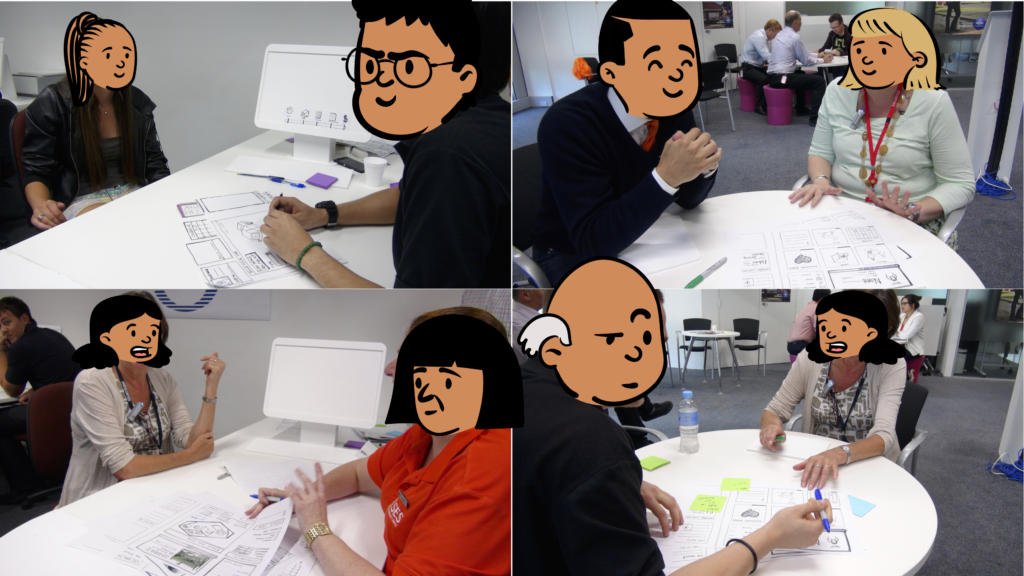
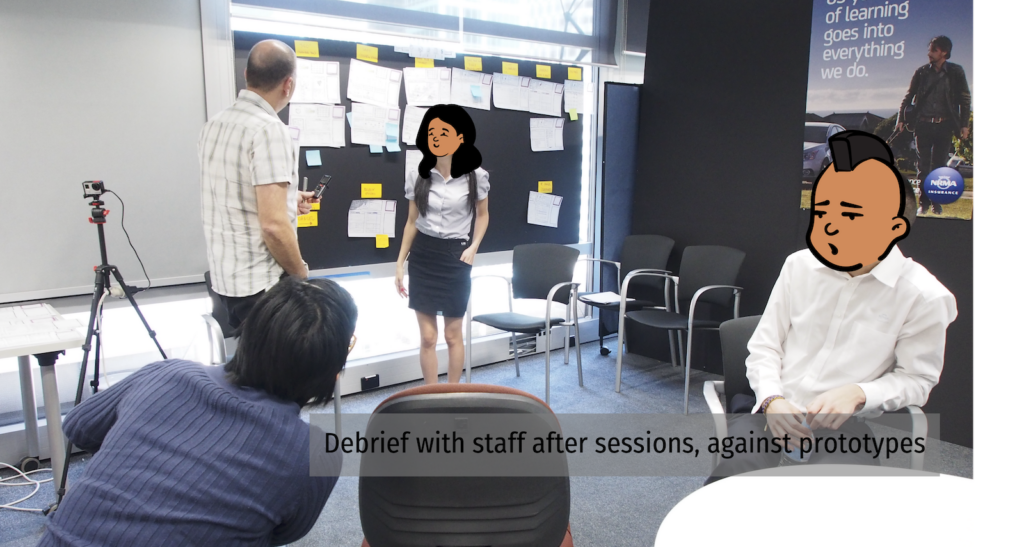
We created a mock NRMA branch outlet, down to fake kiosks, computers, phones, card payment machines and posters. I led facilitation of testing sessions with existing and potential NRMA customers, guiding participants through prototype interactions while observing their responses, questions, and behaviours. Each session was recorded and documented, with detailed notes capturing not just what customers said, but how they engaged with the concepts. Each customer participant was interviewed afterwards for feedback. Staff debriefs following each testing round provided additional insights into what worked and why and decisions on potential changes for the next day’s prototypes.
Analysis and Iteration
Working collaboratively with the CX team, we analysed observations and synthesised findings into actionable insights. I led the progression of concepts through multiple iterations, refining prototypes based on what we learned from each testing cycle. User flows were documented with noted behaviours to inform both immediate iterations and longer-term product development.
Outcomes
Multiple concepts from this prototyping work moved into full development and became product features or operational procedures:
Developed into features:
- The Safe a digital policy and documentation repository
- 360-degree customer profiles for more communication options
- Enhanced quoting variations, e.g.: showing options side by side
- Broader payment options without penalties
Implemented as procedures:
- “Do the heavy lifting” to scaffold customers through complex processes
- Dynamic quote variations showing multiple pricing options including nudging
- Flexible payment approaches offered up front
The project accelerated the number of concepts and hypotheses we could develop and test compared to more traditional product development. By testing value hypotheses rapidly through low-cost prototyping, NRMA could make informed decisions about which features would drive customer retention and acquisition as ideas and theories instead of finished designs or polished interfaces, allowing the customers to be directly involved in the design process.
Reflection
This engagement established a foundation for human-centred design and rapid experimentation at IAG. The success of this approach led to my return for two subsequent engagements in 2017 and 2020. It demonstrated that even in a commoditised market, understanding what customers truly value – and proving it through rapid, low-cost validation – can inform product strategy and justify premium positioning. All of the concepts progressed to more detailed research and discovery, and several were fully implemented as features or processes.
Related case studies
Design-led delivery of a rebuilt management system in a regulated industry.
Simplifying complexity of designing a greater density of information for clinicians.
Back to all Case studies