
Client: Greyhounds Australasia
Partner: V2 AI
Role: Principal Experience Design Consultant
Duration: Oct 2023 – May 2024
Context
Greyhounds Australasia is a federated organisation representing jurisdictional controlling bodies across Australian states, territories, and New Zealand. It operates in a conservative, highly regulated environment where data integrity, compliance, and operational reliability are critical.
V2 AI, a data‑ and software‑focused consultancy, was engaged to rebuild GA’s management and control systems. While the initial framing described a “portal uplift”, the underlying challenge was far more fundamental: fragmented workflows, awkward workarounds, poor usability, and systems optimised for legacy technology rather than the realities of day‑to‑day operational work.
The Problem
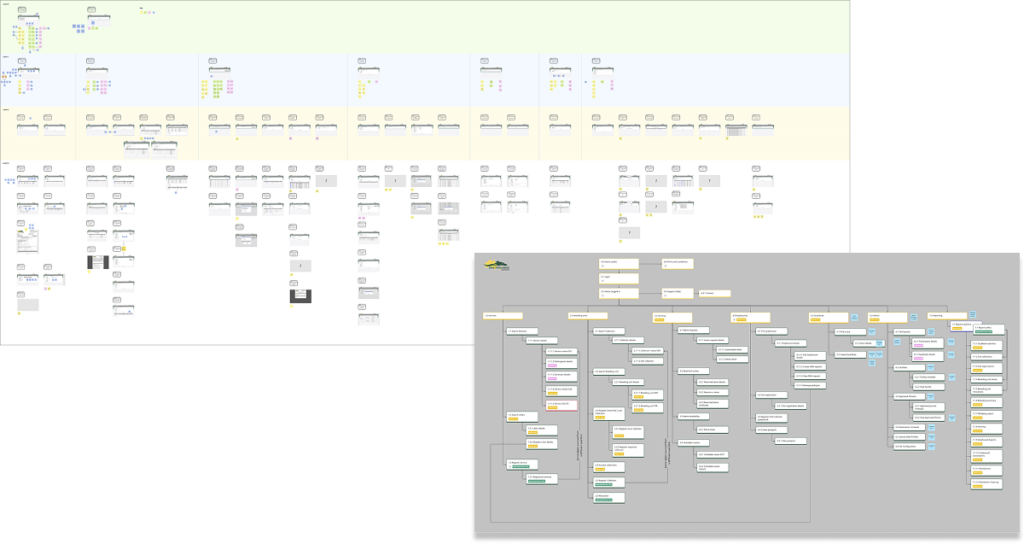
Before this project, GA staff relied on a system that was difficult and stressful to use. Even routine tasks required multiple tabs, screenshots, and handwritten or external notes to move work forward. Over time, staff had developed extensive workarounds to compensate for a system that reflected technical architecture rather than business workflows.
This created operational friction, increased error risk, and made regulatory reporting and decision‑making slower and more difficult than necessary.
A Design‑Led Delivery Model
Rather than treating design as a downstream activity, this engagement operated as a design‑led delivery model.
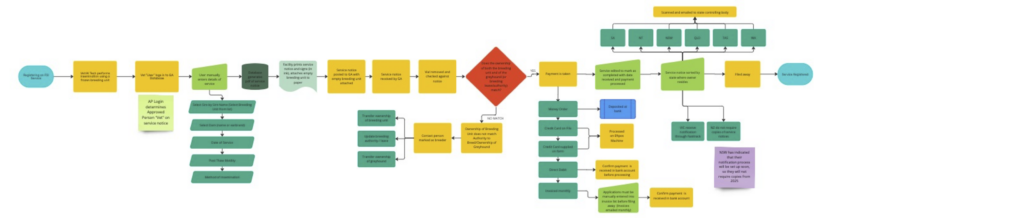
Design was used to structure understanding, align stakeholders, and reduce risk throughout delivery. A repeatable cycle of review, hypothesis, validation, build, showcase, feedback, and resolution coordinated work across design, data, software engineering, and governance, allowing the team to progress confidently within GA’s regulatory constraints.
My Role
As Lead Experience Designer, I was responsible for shaping the experience, workflows, information architecture, and design system across the platform, and for using design artefacts to align delivery across disciplines. I also acted as the primary design interface with the client, reducing day‑to‑day load on engineering.
My responsibilities included:
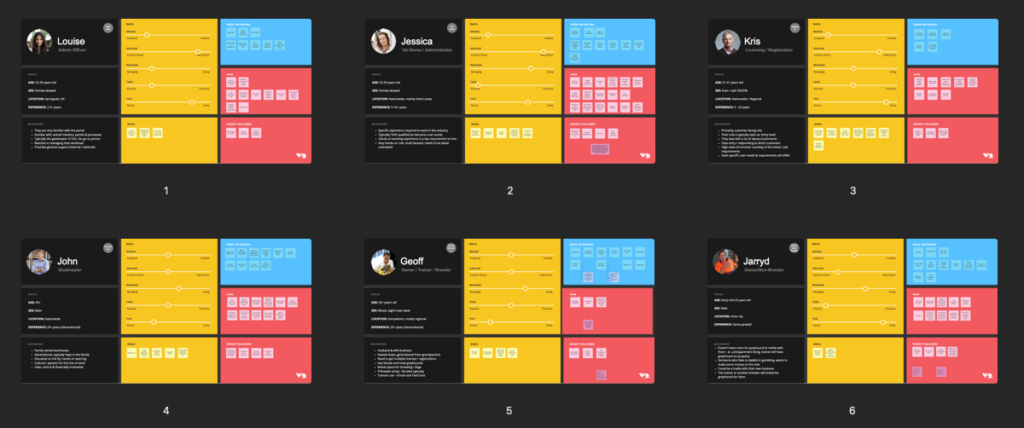
- Unpacking staff, admin, breeder, and veterinary workflows
- Designing and iterating the system information architecture
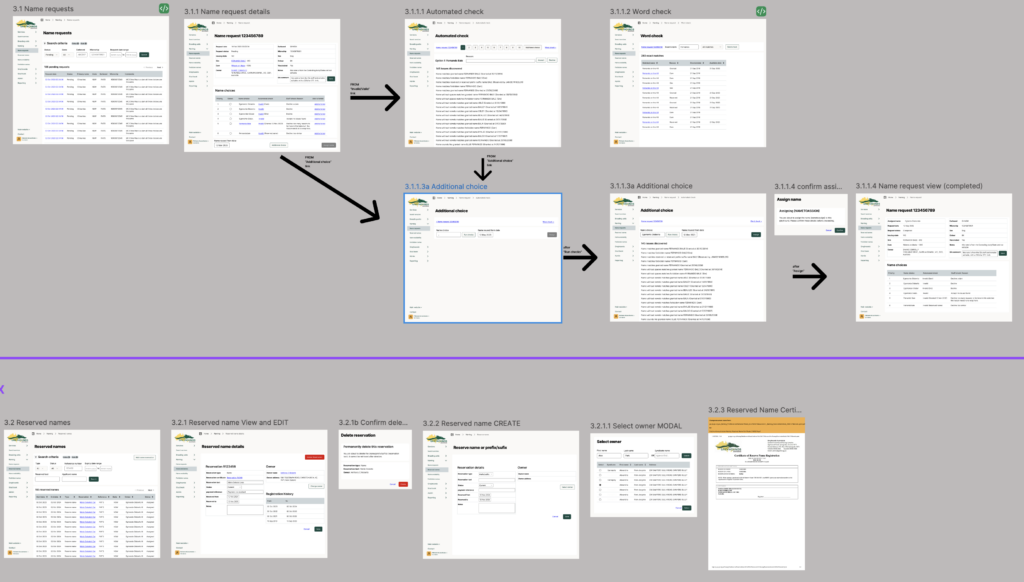
- Defining navigation and screen groupings based on real task sequences and data dependencies
- Producing low‑ and mid‑fidelity designs ahead of development to reduce ambiguity
- Facilitating collaborative workshops with GA stakeholders and V2 delivery teams
- Using design artefacts to surface risk, resolve inconsistencies, and support delivery decisions
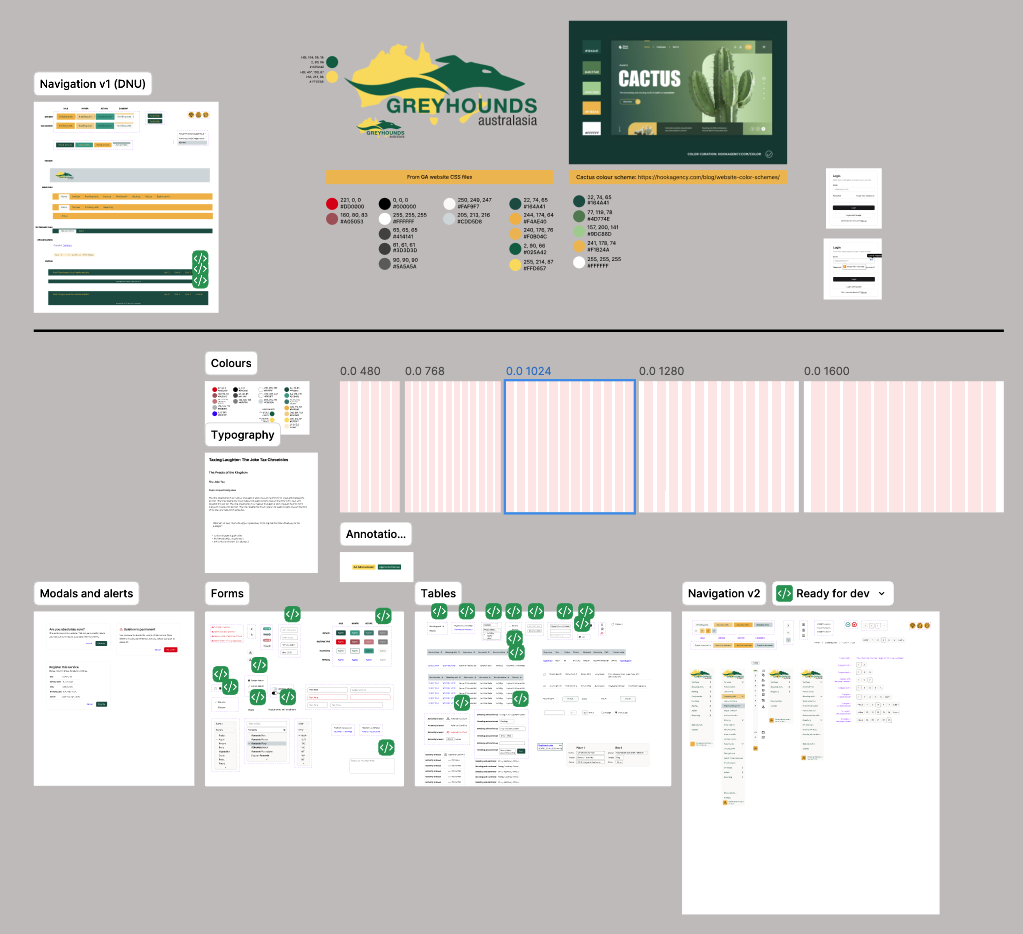
- Establishing and evolving a shared design system to support consistent, scalable screen delivery
How the Work Unfolded
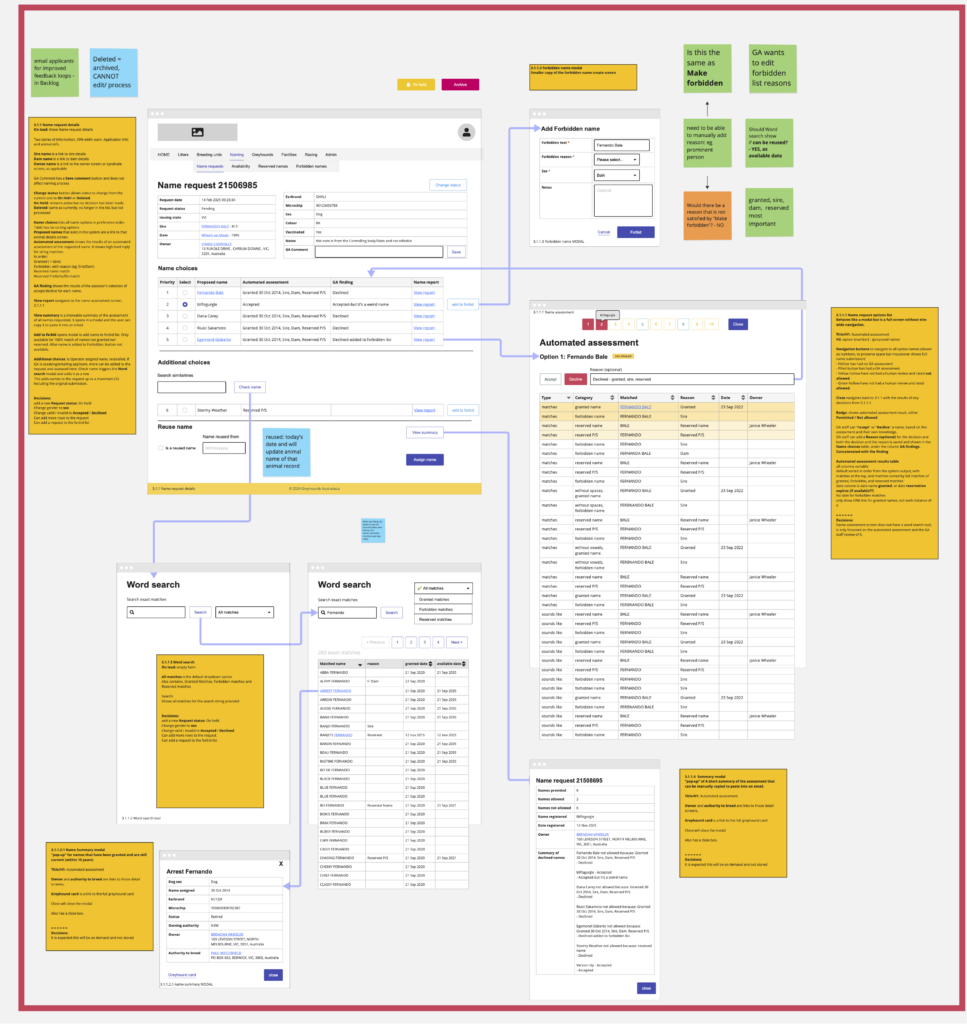
Initial sequencing was constrained by the structure of the existing system and underlying data models. Design work began with the most central system concepts, then cascaded outward through common workflows and supporting functions.
As workshops and validation sessions progressed, the information architecture and navigation were repeatedly adjusted. Screens and sections were moved, grouped, or re‑sequenced to better reflect how work was actually performed and how data dependencies flowed through the system.
Design typically ran one sprint ahead of engineering early on, extending to two sprints ahead as design delivery matured and the design sytem was completed. This allowed design to adapt as engineers uncovered constraints and inconsistencies in the underlying code and data, without blocking delivery.
At the outset, parallel discovery by design (workflows and user needs) and engineering (data models and system behaviour) exposed significant inconsistencies in both the databases and application logic. These findings redirected early delivery focus and informed decisions about what could be safely rebuilt, simplified, or retired.
What Was Delivered
The final delivery replaced the existing system with a multi‑tiered portal, released as a single production update.
The solution included:
- Distinct interfaces for GA staff, registered breeders, and veterinarians
- Rebuilt workflows supporting breeding material collection, storage, and use
- New reporting interfaces to meet regulatory and compliance requirements
- Review, cleanup, and refinement of underlying code and data structures
- An AI‑supported name‑finding tool, increasing applicant success in selecting compliant and unique names
While designs existed for a broader user base, only roles required for this release were deployed.
Release and Rollout
Although production release occurred as a single cut‑over, testing was staged. New screens progressively replaced legacy screens in the test environment, with the ability to fall back as development continued.
Once the new system met stability and functional requirements, a planned weekend evening deployment fully replaced the previous version.
Outcomes
After deployment, GA staff were using a system designed around their actual needs and priorities rather than legacy technical constraints. Common tasks required fewer steps, less cognitive load, and significantly less reliance on informal workarounds.
The design‑led approach reduced delivery risk, improved confidence in regulatory reporting, and supported a cleaner, more maintainable technical foundation.
The system has remained in active use since its release in June.
Reflection
This project demonstrated how a design‑led process can operate effectively inside a conservative, regulated industry. By using design as a coordination and sense‑making layer across data, software, and governance, the team was able to deliver a usable, resilient system without compromising compliance or operational integrity.
Related pages
Research and Discovery across a wide band of user cohorts
Improving enterprise search: Making search better in Objective ECM.
Back to all Case studies