
Organisation: Objective Corporation Limited
Project: The engage Program
Role: Senior User Experience Architect
Duration: 2016-2017
Context
I created the engage program at Objective Corporation to address a structural gap in how customer insight was gathered and applied.
Objective had strong executive relationships with clients, but insight about day-to-day usage was filtered through managers and administrators rather than gathered directly from users. The working principle was “users, not choosers” — decision-makers were well understood; frontline users were not.
This gap became critical as Objective moved its flagship products from an on-premises Windows architecture to a cloud-based, API-driven browser platform, making it essential that change be grounded in real user behaviour and needs rather than assumptions or second-hand interpretations.
My role
As the Senior User Experience Architect at Objective Corporation, I created and ran the engage program across multiple product and delivery teams.
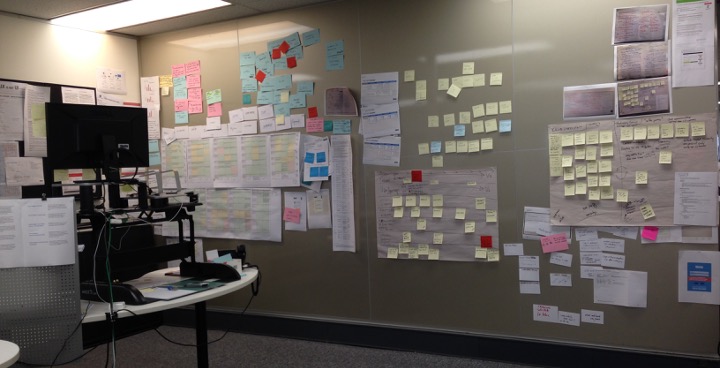
While my original brief focused on experience design, I expanded the scope into a structured, repeatable program that embedded research, field engagement, dynamic synthesis, and repeated feedback loops directly into product strategy and delivery.
My role included:
- Creating and marketing the engage program model and operating cadence internally and through client-facing campaigns
- Partnering with sales, support, and implementation teams to identify priority customer segments
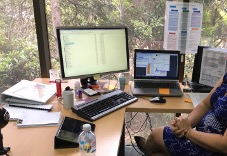
- Planning and running field research across multiple client sites
- Engaging directly with hundreds of users across government, regulated industry, and enterprise
- Synthesising insights for product, design, engineering, support, and leadership teams
- Socialising findings through showcases, artefacts, conferences, and user groups
- Supporting teams through coaching, prototype testing, and beta iteration
The problem
The engage program addressed three systemic problems.
First, Objective lacked an ongoing, direct relationship with frontline users, limiting feedback velocity with shallow decision-making evidence.
Second, the cloud/API transformation created a narrow window to redesign long-standing workflows; without user participation, there was a risk of recreating legacy friction.
Third, the sensitivity of customer data constrained the use of standard analytics tools, requiring a bespoke approach to understanding system performance and user behaviour over the longer term.
Program Design & Strategy
The engage program combined field-based research, rapid validation, and ongoing outreach in a structure designed to operate alongside active product delivery.
Field-Based Road Trips
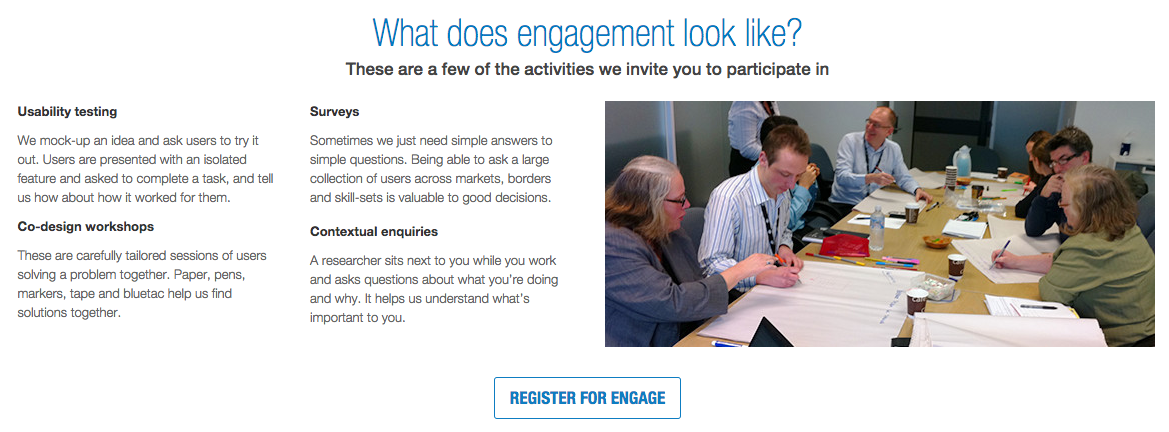
Regional road trips were planned in collaboration with sales and implementation teams, enabling visits to four to six client organisations per region. Each visit followed a consistent four-hour structure covering contextual enquiry, prototype or beta testing, round-table feedback, and executive interviews.
Remote Testing and Ongoing Validation
Remote engagement complemented field visits through volunteer recruitment, bespoke testing environments, surveys, and moderated discussion groups. Product and engineering teams were encouraged to observe sessions directly. One example of this is the Improving enterprise search story mentioned in my case studies.
Outreach and Community Engagement
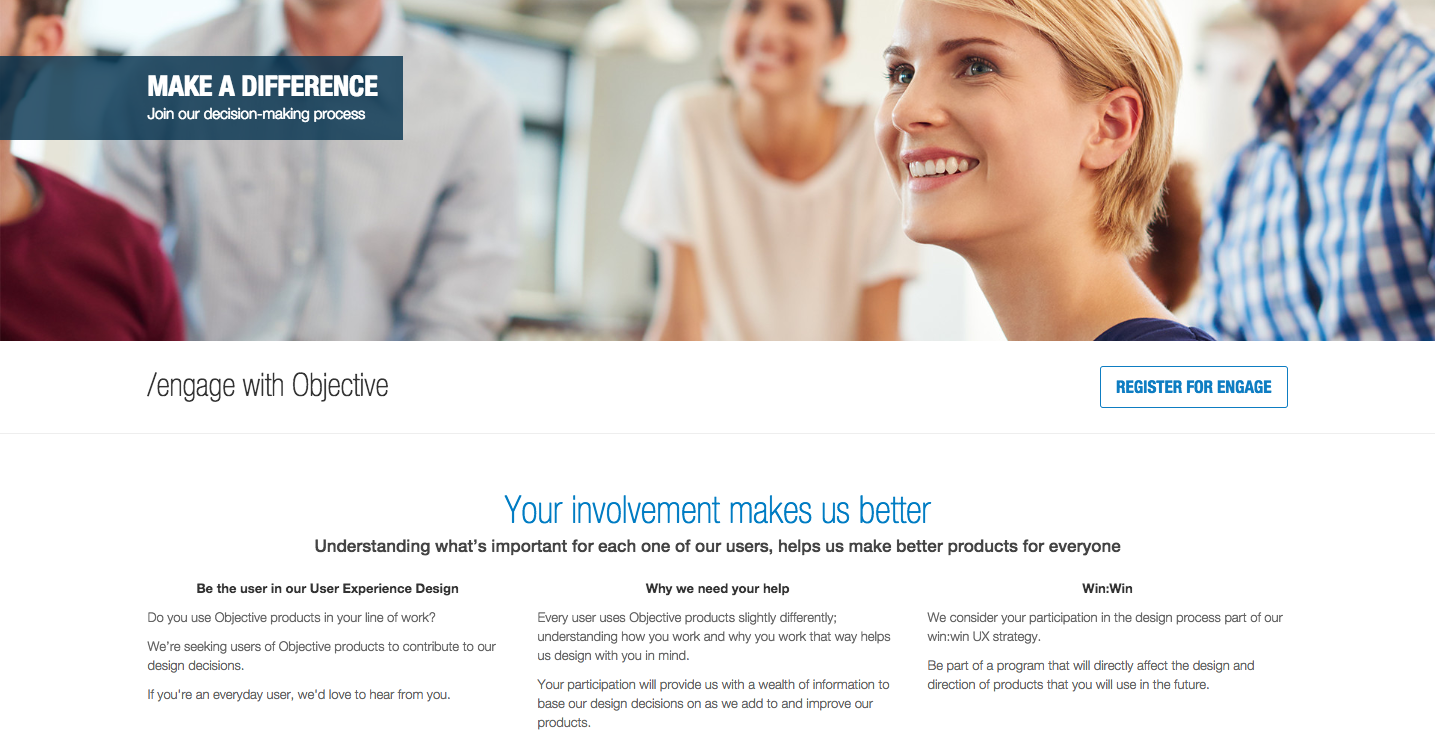
Clients were invited to present their own usage patterns at Objective offices, and the program was shared through international conferences and user groups to attract participants and contributors.
Outcomes & Impact
The engage program produced sustained outcomes across product delivery, decision quality, and organisational practice by embedding direct user evidence into everyday work.
- Expanded evidence base through hundreds of direct user interactions
- Faster, better-grounded decisions validated through prototypes and betas
- A standing participant pool of ~150 volunteers enabling rapid testing
- Reduced recruitment friction as clients sought early access and influence
- Enduring practice, with methods still in use more than two years after my departure
How the engage program Changed Product Decision-Making
- By establishing a direct relationship with users, the engage program reframed how product decisions were discussed, prioritised, and justified.
- Proven interaction models accelerated cross-product integration
- Roadmaps expanded from internally driven goals to evidence-led direction
- Delivery teams developed shared, first-hand understanding of users
- Real users replaced abstract personas in everyday product discussions
- Design maturity increased across the organisation
Related pages
Design-led delivery of a rebuilt management system in a regulated industry.
Reframing My Health Record: an accessible prize winning app design
Back to all Case studies